An Expert CPD Offering
Looking Back with Adam Taylor
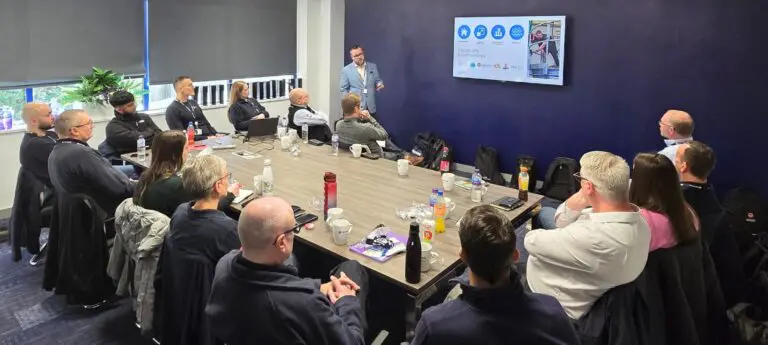
This year, Charles McIntyre (Tenmat Marketing Manager) and myself took the opportunity to undertake RIBA accreditation for our Technical Discussion on External Wall Cavity Barriers CPD.
Securing this accreditation has significantly strengthened the way we can engage with the wider industry and collaborate with professionals who are keen to understand how modern façade construction can be designed and executed to limit fire spread within cavities and external wall systems.

Adam Taylor, National specification manager, Tenmat
The Numbers Tell the Story
Since gaining RIBA approval for our CPD in April this year, we have shared our expertise with over 950 professionals (architects and contractors) across the UK.
121
CPDs delivered across the UK
47
Online Sessions
Reaching 282 attendees
74
Face-to-face events
Complete with 675 meals served!

LEGISLATIVE RELEVANCE
The Regulatory Landscape
By aligning our CPD content with the current regulatory landscape – including Approved Document B (Fire Safety), key provisions of the Building Safety Act 2022, the requirements for Higher-Risk Buildings (HRBs), and the oversight role of the Building Safety Regulator (BSR) – we have been able to structure clear, evidence-based guidance.
This alignment ensures we are not only addressing today’s compliance expectations but also contributing to the futureproofing of the built environment through safer, better‑documented façade design practices.
TECHNICAL comprehension
Expertise Grounded in Evidence
For many years, passive fire protection in façades has been an area of uncertainty. Traditional product testing often failed to reflect real‑world construction methods, especially as Modern Methods of Construction (MMC) and innovative façade materials became more widespread. The proliferation of external wall products – ranging from rainscreen systems to contemporary composite materials – made it increasingly difficult for designers and specifiers to obtain reliable assurance that complete through‑wall build-ups performed safely under fire conditions.
Our sustained programme of system-based testing, incorporating EN fire-test standards and TGD-19 testing has enabled us to build a robust body of performance data. These tests reflect the exact build-ups we encounter across the UK and Europe, capturing the nuances of material behaviour, cavity dynamics, and façade structural response under fire stress. This technical grounding has allowed us to develop a CPD that brings together multiple complex topics into a practical and engaging narrative supported by factual, system‑specific evidence.
Understanding Material Behaviour
While current regulations now require the use of non combustible (A1/A2 s1,d0) materials on buildings above 11m, this alone does not eliminate the risks associated with varying material responses to heat. During our research, we examined critical aspects such as material melting points, thermal deformation, and the impact of heat on structural loading. Even when cavity barriers maintain their integrity, fire and smoke can bypass the system if façade materials distort, delaminate, or soften under elevated temperatures. Understanding these behaviours is essential to ensuring that a compliant system is also a resilient one.
EXTERNAL WALL SPECIALISTS
Getting to Grips with Façades
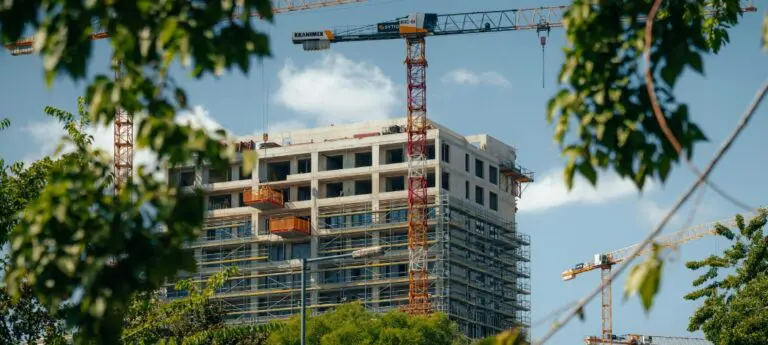
Façades today incorporate increasingly sophisticated design choices – such as brick-slip systems, aluminium cassette panels, and numerous next-generation modular solutions. Each material presents unique challenges in terms of movement, fixings, ventilation, and fire-stopping strategy.
Our focus is therefore directed not only at the external appearance but at the hidden complexity behind the façade, where cavity barriers, insulation types, brackets, rails, and substrate materials interact.

Conclusion
By providing a CPD grounded in realistic testing, aligned to UK guidance and EN standards, and responsive to the expectations of the BSA and BSR, we have been able to support specifiers, designers, and contractors in making decisions that enhance fire safety while enabling modern architectural expression.
Our goal was simple: to help the industry design and construct external wall systems that perform reliably, contain fire spread, and ultimately make buildings safer for occupants and communities, and the take up this year with over 120 CPDs has proven that we have solutions that people are welcoming and needing.